A transformative development initiative aimed at improving the lives of adolescent girls is drawing to a successful close in southern Sierra Leone, with communities already stepping forward to sustain and expand its impact.
The project, Enhancing Menstrual Hygiene Management in Schools and Communities in Malen and Sorogbema Area Programmes, has significantly improved access to safe water, sanitation, and reproductive health education for thousands of beneficiaries in Gon and Jao communities. The initiative will be officially handed over to the communities on Friday, 17th April 2026, marking a major milestone in locally driven development.
Funded by a consortium of committed partners through World Vision Korea and implemented by World Vision International Sierra Leone, the project represents a powerful example of global partnership delivering tangible results at the grassroots level. Key donors include Mizone Co., Ltd., Grace, Chungbuk Partnership Church, Lee Seung Hee, Lee Gyeong Su, Amorepacific, Jo Sungmo & Miracle Makers, and Ecredible Co., Ltd.
Together, these partners have supported a comprehensive package of interventions designed to tackle the barriers girls face in education, particularly those linked to menstrual health and gender inequality.
Transforming Schools and Changing Lives
For years, many girls in rural Sierra Leone missed school during their menstrual periods due to stigma, lack of sanitary materials, and absence of private facilities. This project has changed that narrative.
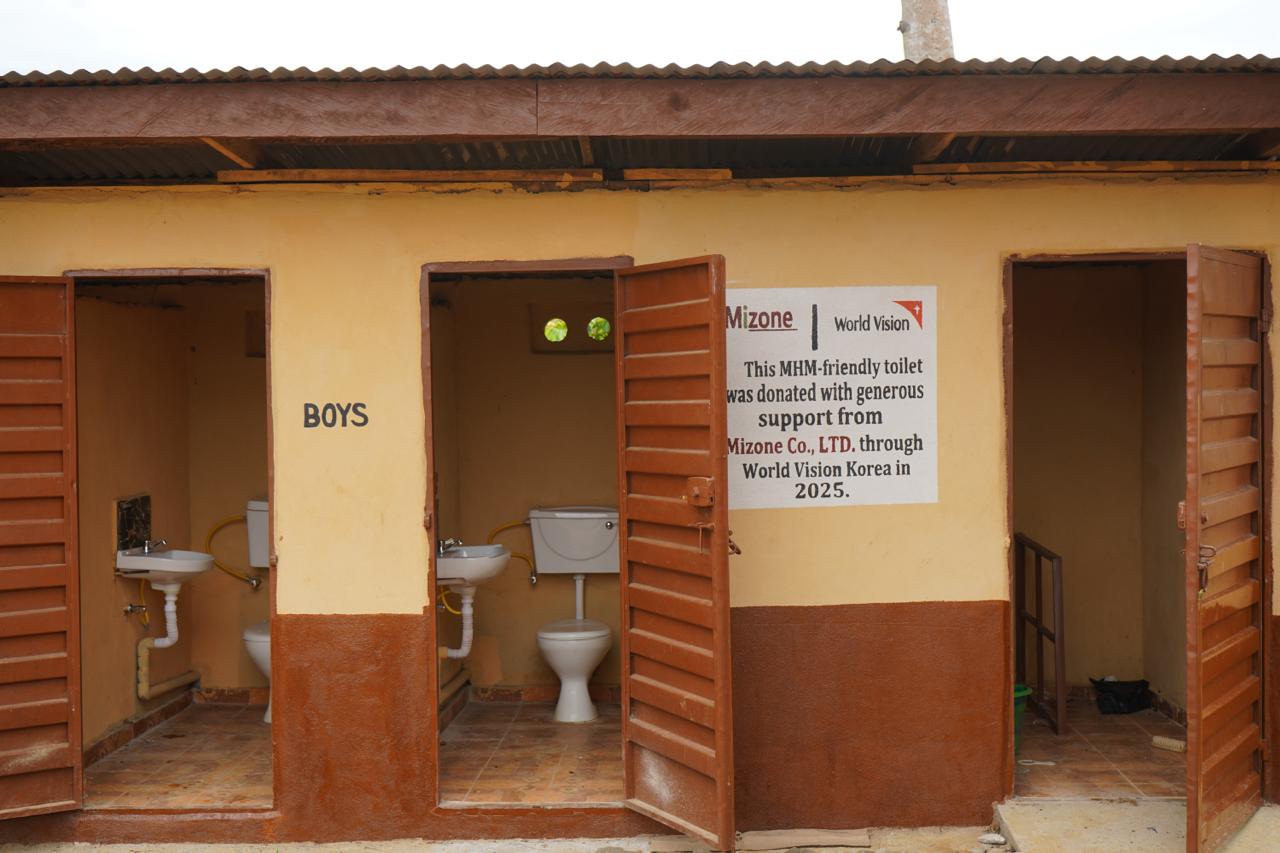
Modern menstrual hygiene management (MHM)-friendly toilets have been constructed, providing girls with safe, private, and dignified spaces. Multiple water points have also been installed, ensuring access to clean water for hygiene and sanitation.
In addition, girls have received menstrual hygiene kits and hands-on training in producing reusable sanitary pads, an innovation that is both cost-effective and sustainable. Through peer mentoring and school-based MHM clubs, knowledge is being shared widely, creating a ripple effect that extends beyond the classroom.
The results have been striking. School authorities report a significant drop in menstruation-related absenteeism, while girls themselves express renewed confidence and freedom to participate fully in school life.
“Before, I stayed home during my period,” said one student in Gon Community. “Now I come to school every day and even teach others how to make pads.”
Building Confidence, Breaking Barriers
Beyond physical infrastructure, the project has addressed deep-rooted cultural and social challenges. Through life-skills education, community dialogues, and school-based training sessions, conversations around menstruation, once considered taboo, are now taking place openly.
Girls are learning about their bodies, rights, and health, while boys are being engaged as allies in promoting respect and dignity. Teachers have been trained to provide guidance and counselling, and parents are increasingly supportive, discussing issues of puberty and reproductive health with their children.
The initiative has also strengthened systems to prevent and respond to school-related gender-based violence, ensuring safer learning environments for all students.
Community leaders, including traditional and religious authorities, have played a critical role in championing these changes. Their involvement has helped shift attitudes, reduce stigma, and reinforce collective responsibility for the well-being of girls.
Communities Step Forward
Perhaps the most compelling success of the project lies in the strong sense of ownership demonstrated by the communities themselves.
Even before the official handover, residents in Gon and Jao have taken proactive steps to sustain and expand the project’s achievements. Using locally mobilised resources, communities have constructed additional tap stands to complement those installed by the project, improving water access for even more households.
School health clubs, peer support groups, and community-based structures established under the project continue to function, ensuring that knowledge-sharing and support systems remain in place.
This level of engagement signals a shift from dependency to self-reliance, one of the core goals of sustainable development.
A Model for Lasting Impact
With nearly 12,000 direct beneficiaries reached, including pupils, teachers, women, and families, the project has delivered measurable improvements in health, education, and social inclusion.
Stakeholders say the initiative offers a model for how integrated approaches, combining infrastructure, education, and community engagement, can deliver lasting change.
As the handover ceremony approaches on 17th April 2026, there is a strong sense of pride and optimism across the beneficiary communities. What began as an externally funded intervention has evolved into a community-led movement, one that is restoring dignity, promoting equality, and unlocking the full potential of girls.
For the people of Malen and Sorogbema, the message is clear: when communities are empowered and supported, they do not just sustain change, they multiply it.
About the Author