GOVERNMENT OFFICIALS WORRIED
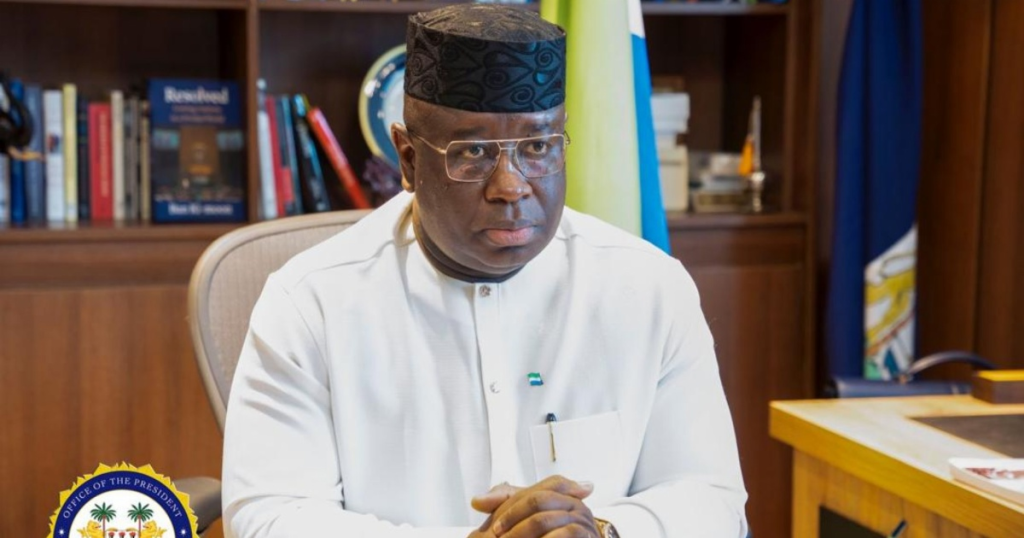
His Excellency the President, Rtd. Brig. Dr. Julius Maada Bio, the Honourable Vice President Dr. Mohamed Juldeh Jalloh alongside senior government officials met over the weekend to discuss the strong economic ripple effects of the geographical conflict involving Iran, Israel, and the United States in the Middle East and find strategies to tackle them.
According to very reliable sources, the discussions were centred on how the government would tackle the rise in fuel prices as the Middle East war continues to push global oil prices to the highest level in years.
Both the Minister of Finance and the Minister of Trade and Industry also reportedly met separately to map out strategies to tackle the economic consequences of the Gulf region war, such as high oil prices that have increased transportation and electricity costs, inflation and currency instability, drastic increase in import costs, among other economic consequences.
The ongoing geopolitical conflict has become one of the most significant global conflicts shaping the international political economy. Although the war is geographically located in the Middle East, its economic consequences are global. Africa, which depends heavily on imported energy, food, and industrial commodities, experiences strong economic ripple effects whenever tensions escalate in this region.
According to Paul Allieu Kamara, who’s Professor of Leadership and Organisation Development, specialising in Strategic Chain Management at tge Global Interfaith University, which is approved by California University, USA, said: “One of the most immediate economic impacts on Africa is the rise in global oil prices. This is partly due to disruptions around the Strait of Hormuz, a maritime route that carries nearly 20% of the world’s oil supply. For Africa, the consequences are severe because most African countries import refined petroleum.”
Countries most affected, according to Professor Kamara, are Ghana, South Africa, Nigeria, Sierra Leone, and other import-dependent economies in Africa, adding that countries that suffer more are oil-importing economies that experience high fuel costs, inflation and budget deficits.
He also informed that shipping disruptions in the Gulf region have affected fertiliser imports, natural gas, and aluminium and sulfur, noting that when fertiliser prices rise, farmers produce less, food prices increase, and food insufficiency expands. Kamara, who’s also a Professor of Leadership and Administration at Lawrence Bible Univetsity, in Sierra Leone, emphasised that the Middle East war demonstrates how distant geopolitical conflict can profoundly affect Africa economies.
“Through rising of oil prices, inflation, supply chain disruptions, and agricultural shocks, the war fuels economic instability across the continent. However, it also provides an important lesson: Africa must diversify its energy sources, strengthen regional trade, and build resilient economic systems capable of withstanding global geopolitical shocks.”
About the Author