By Shannon A. L. Scott
The Bank of Sierra Leone (BSL) has announced the successful resolution of Union Trust Bank Limited (UTB) and the transfer of its operations to Rokel Commercial Bank (RCBank), in a move aimed at protecting depositors and preserving confidence in the country’s financial system.
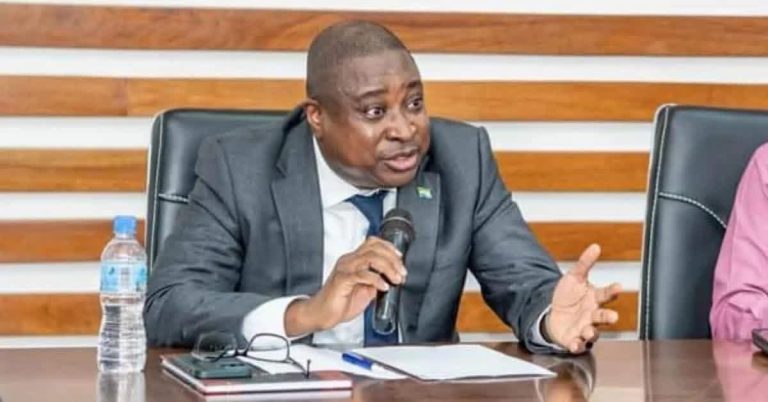
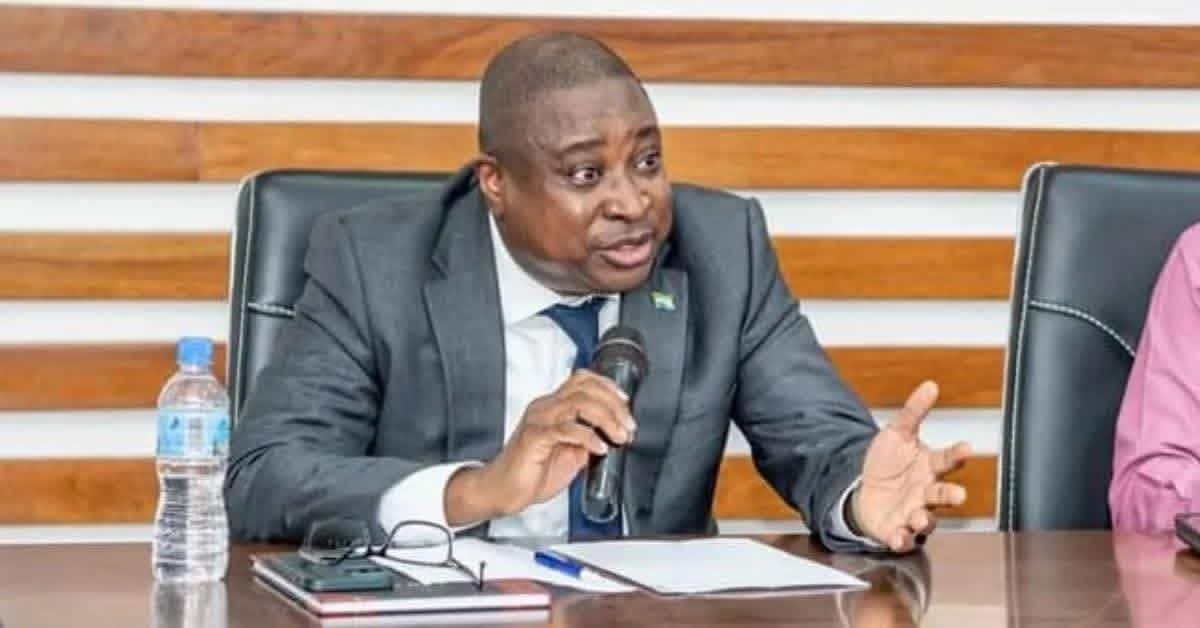
Speaking during an official takeover ceremony held at the Bank of Sierra Leone Auditorium on Gloucester Street in Freetown, BSL Governor Dr. Ibrahim Stevens described the action as a necessary regulatory intervention following UTB’s failure to meet statutory requirements under the Banking Act 2019.
Dr. Stevens emphasized that the development was not a conventional corporate takeover but a legally mandated resolution process designed to safeguard financial stability and protect depositors’ funds.
According to the Governor, UTB had become insolvent after consistently failing to meet the minimum paid-up capital requirements prescribed by law. As of December 2025, the bank’s paid-up capital stood at NLe33.82 million, far below the NLe122 million required under the first phase of the revised capital framework. The bank had also accumulated losses amounting to NLe328.52 million, resulting in a significantly negative capital position.
The Governor disclosed that BSL had placed UTB under enhanced supervision in September 2020 and stationed a resident examiner at the institution to closely monitor its operations. Over the past five years, the central bank issued several directives to UTB’s shareholders and management, urging them to inject fresh capital, strengthen governance and risk management systems, improve asset quality, and restore profitability.
Despite these interventions, shareholders failed to recapitalize the bank, and no credible recovery plan was implemented. An independent diagnostic and forensic review conducted by Ernst & Young Ghana in 2024 further confirmed the bank’s deteriorating financial condition. The review cited negative Tier One capital, failed restoration efforts, worsening asset quality, and limited prospects for recovery.
Dr. Stevens noted that the resolution process was also consistent with Sierra Leone’s commitments under its economic reform programme with the International Monetary Fund (IMF). He warned that allowing UTB to continue operating would have exposed depositors to significant risks and potentially undermined the stability of the national financial system.
Under a Purchase and Assumption arrangement approved by the Bank of Sierra Leone, all customer deposits and performing assets of UTB have been transferred to Rokel Commercial Bank. Non-performing and impaired assets will remain under the management of Kreston Sierra Leone Limited, an intermediary institution authorized to recover outstanding loans and other distressed assets.
The Government of Sierra Leone has committed to covering any funding gap resulting from the transaction to ensure that depositors do not suffer losses and that the acquiring bank remains financially sound.
Addressing concerns about employees, the Governor announced that all UTB staff would be absorbed by Rokel Commercial Bank as part of the transition process. He further revealed that the Government would fund end-of-service benefits for employees, as UTB lacked the financial capacity to meet those obligations.
The transfer of business was successfully completed on June 16, 2026, with UTB officially ceasing to exist as a licensed financial institution at midnight.
Dr. Stevens concluded by reaffirming that the Bank of Sierra Leone acted in full compliance with the Banking Act 2019 and only after exhausting all available recovery options. He maintained that the resolution was undertaken solely to protect depositors, maintain confidence in the banking sector, and strengthen the resilience of Sierra Leone’s financial system.
About the Author