The newsroom smelled of ink, sweat and defiance.
In late 1997, in the heart of Freetown, we were young, underpaid, and acutely aware that every word we printed could come at a cost. Sierra Leone was under military rule. The Armed Forces Revolutionary Council (AFRC) had overthrown the democratically elected government of President Ahmad Tejan Kabbah, and fear had settled over the country like a permanent shadow.
But journalism, even then, refused to whisper.
At The Democrat, where I worked as a young reporter, we chose to confront power the only way we knew how—through the printed word. At a time of acute fuel shortages and growing public frustration, we ran a front-page editorial that pulled no punches: “AFRC Shit Hits Its Fans.”
It was bold. It was risky. And it did not go unnoticed.
The same day, soldiers stormed our office on George Street. The building, which also housed Stop Press (a gathering place for journalists, civil society voices, and political thinkers) was more than just a workplace. It was a space for ideas. That day, it became a target.
They ransacked everything. Equipment was destroyed. The newsroom was left in ruins.
Our editor, the late Pios Foray, narrowly avoided arrest and went into hiding. Our secretary, Rachel, pregnant at the time, was taken away. She later died. I was on my way to work when I heard what had happened. I never made it to the office. I went into hiding instead.
Others endured even more. I remember seeing John Foray after his detention and torture at the SSC camp in Regent. The man I saw was barely recognizable—he could not stand upright. The injuries he carried stayed with him for years until his death much later. That image has never left me.
And yet, for all its brutality, that moment did not silence us.
If anything, it hardened our resolve. Many of those who passed through that battered newsroom went on to shape Sierra Leone’s media in lasting ways. Ibrahim Babatunde Sesay continues to inform the public through the Satellite newspaper. Isaac Swen now publishes the Open Space newspaper. Abu Bakar Joe Sesay took a different path and today plays a key role in government communications at the Ministry of Information.
The message was clear then, and it still resonates now: repression did not break the press—it reshaped it.
Nearly three decades on, Sierra Leone’s media landscape has changed in ways we could scarcely have imagined. The overt violence of the past has largely receded. The repeal of the criminal libel law removed a long-standing tool of repression. Radio, television, and digital platforms have expanded the national conversation, connecting citizens at home and in the diaspora.
But progress, while real, is not absolute.
The latest World Press Freedom Index by Reporters Without Borders places Sierra Leone at 79th out of 180 countries. It is a position that reflects neither crisis nor comfort but something more fragile: uncertainty.
Globally, the report warns that press freedom has been on a steady decline for over two decades. Sierra Leone is not immune to that trend. The threats facing journalism today are less visible than in 1997, but no less consequential.
Economic vulnerability remains one of the most powerful constraints. Many media institutions operate on the margins, and journalists often work under conditions that make independence difficult to sustain. In such an environment, financial pressure can quietly shape editorial choices, eroding credibility over time.
The legal landscape also presents new concerns. The introduction of cyber laws, while intended to regulate the digital space, has created unease within the media community. There are growing fears that such laws could be used to curb dissent, particularly online, where much of today’s public debate takes place.
For women in journalism, the barriers are even higher. Alongside low pay and limited opportunities, harrassment, both in newsrooms and in the field, remains a persistent challenge. It is telling that even organizations like BBC Media Action have recently stepped in to train female journalists on how to deal with harassment. That such training is necessary speaks volumes about the conditions many women continue to navigate.
A recent case at the Sierra Leone Broadcasting Corporation further underscores the problem. A female staff member was reportedly harassed and mistreated, prompting intervention from the Independent Media Commission, which ruled that she be reinstated and compensated. Whether that ruling has been fully implemented remains uncertain—highlighting a deeper issue: the gap between policy and practice.
These are not isolated concerns. They point to a broader reality that press freedom is no longer primarily threatened by force, but by fragility. Fragile institutions. Fragile protections. Fragile economic foundations.
This matters now more than ever.
Sierra Leone’s democracy, while enduring, remains delicate. As the country moves toward the 2028 elections, the role of the media becomes even more critical. Elections are not just about ballots; they are about information, accountability, and trust.
A weakened media cannot effectively play that role.
If journalists are constrained by financial pressure, legal ambiguity, or personal risk, the quality of public discourse suffers. And when public discourse suffers, democracy itself begins to erode, often quietly and without immediate notice.
Sierra Leone has come a long way from the days when soldiers could walk into a newsroom and shut it down with impunity. That progress should be recognized.
But history also offers a warning.
The story of George Street is not just about what happened. It is about what can happen when the space for truth is allowed to shrink. The scars of that era, carried by those who survived it, are a reminder that press freedom is never permanently secured. It must be protected, reinforced, and, when necessary, defended.
The drop in the Press Freedom Index is not a verdickt but it is a signal.
The task ahead is clear. Strengthen institutions. Protect journalists, especially the most vulnerable. Ensure that laws safeguard, rather than suppress. And create an environment where speaking truth to power is not an act of courage, but a professional norm.
Because in the end, the true measure of Sierra Leone’s democracy will not be found in rankings or reforms alone. It will be seen in whether its media can operate freely, fearlessly, and fairly, especially when it matters most.
And with 2028 on the horizon, it will matter more than ever.
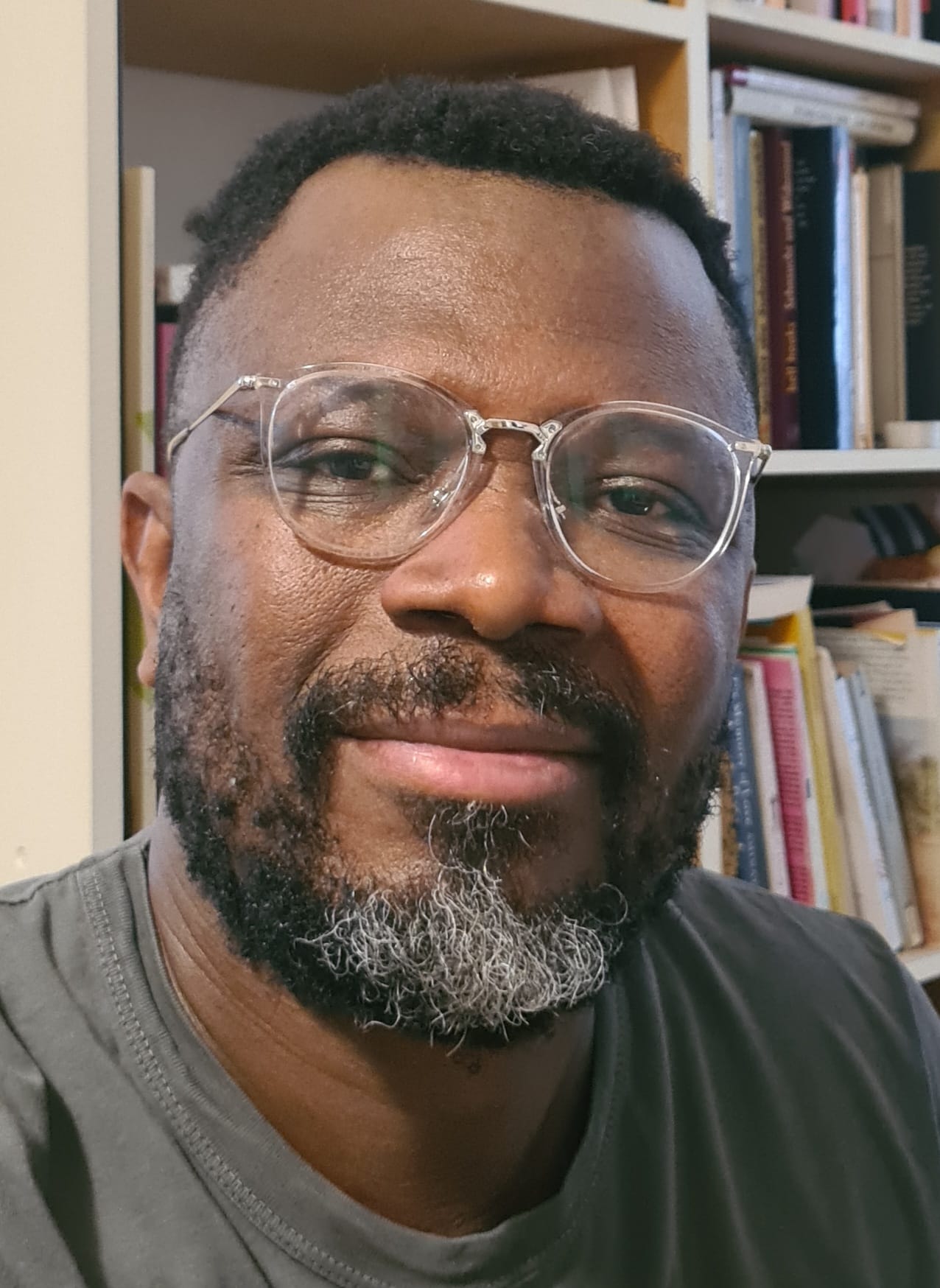
Tejan Lamboi is Journalist, Researcher and Diversity Expert based in Berlin, Germany.
About the Author