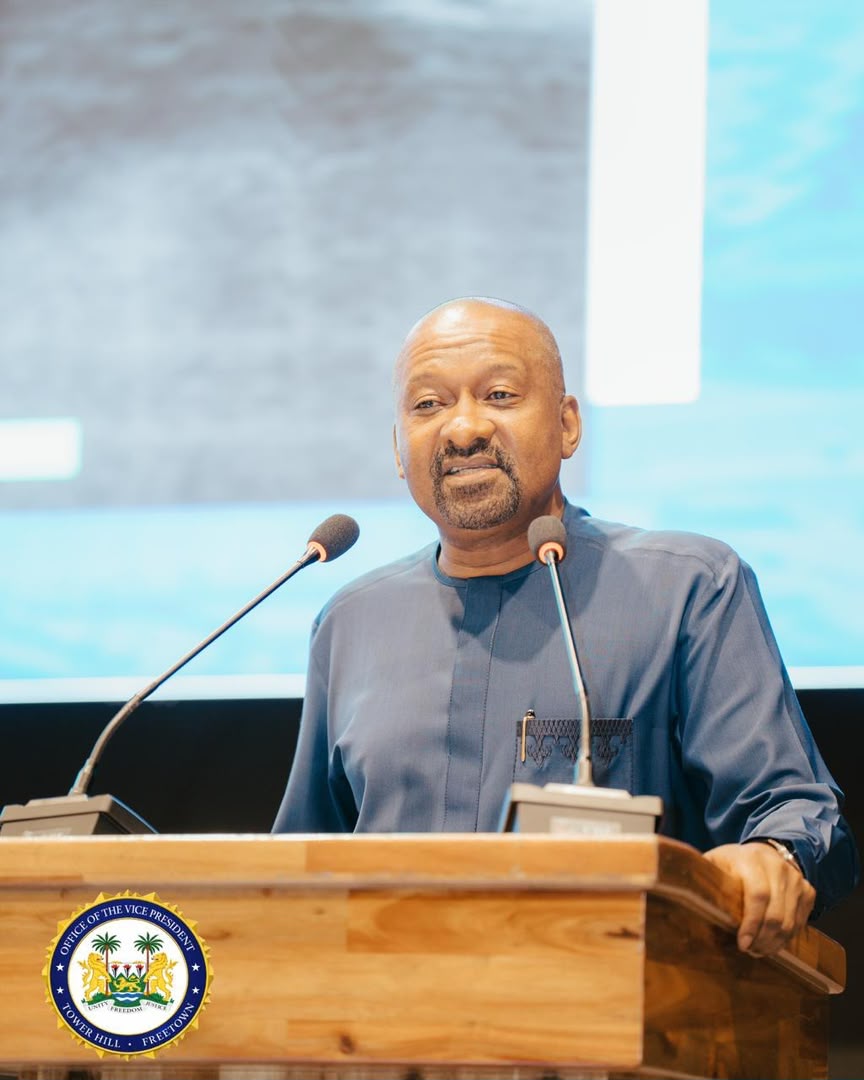
Honourable Vice President Dr. Mohamed Juldeh Jalloh has called for stronger international cooperation to expand access to reliable information and strengthen governance as global stakeholders meet in Sierra Leone.
VP Juldeh Jalloh made the call on Monday 28th September 2026, when he was officially opening the 17th International Conference of Information Commissioners (ICIC) alongside UNESCO’s global commemoration of the International Day of Universal Access to Information (IDUAI).
The three-day conference, held September 28-30 at the Julius Maada Bio International Conference Centre in Lungi, is being hosted by Sierra Leone’s Right to Access Information Commission (RAIC) in collaboration with UNESCO. Its theme is “Upholding Information Integrity in the Digital Age: The Role of Access to Information in Addressing Information Disorder.”
In his keynote address on behalf of His Excellency President Dr. Julius Maada Bio, VP Juldeh Jalloh welcomed participants and described the gathering as timely amid rapid digital transformation and growing citizen participation in public affairs.
The Honourable Vice President traced Sierra Leone’s Information and democratic development through periods of one-party rule, civil conflict, and the return to multiparty democracy in the 1990s.
Against that backdrop, he identified citizens’ ability to obtain public information as one measure of democratic development, according to his keynote address.
VP Juldeh Jalloh highlighted Sierra Leone’s Right to Access Information Act of 2013, which established the Right to Access Information Commission as a key step in creating a formal framework for citizens to obtain public information.
He also pointed to data protection legislation as part of the country’s wider effort to regulate and protect information, noting that access to information allows citizens to examine government’s performance, participate in policy discussions and hold public officials accountable.
VP Juldeh Jalloh cited the 2020 repeal of criminal libel provisions in the 1965 Public Order Act as another milestone in Sierra Leone’s efforts to reform its information and democratic environment.
He stresses that the rapid development of digital technologies and artificial intelligence has expanded opportunities for information access while creating new challenges for governments and citizens.
The Vice President identified limited Internet connectivity, particularly in rural communities, literacy barriers, and institutional practices affecting the release of public information among the challenges that require continued attention.
The conference itself is centred on the relationship between access to information and information disorder, with organisers describing credible and accurate public information as an important tool for addressing misinformation, disinformation, and hate speech.
The official conference programme places VP Juldeh Jalloh at the centre of the opening ceremony and includes subsequent sessions examining how timely and reliable official information can strengthen the information environment and counter-information disorder.
The conference will also examine issues including credible public data, information disorder in Africa, access to information among women and young people, data protection, and beneficial ownership transparency.
VP Juldeh Jalloh urged participants to use the gathering to identify practical measures for expanding access to reliable information, protecting information integrity, and strengthening democratic institutions while accounting for the institutional and economic realities of developing countries.
About the Author